
Osa Peninsula: Corcovado National Park and what to check before buying land
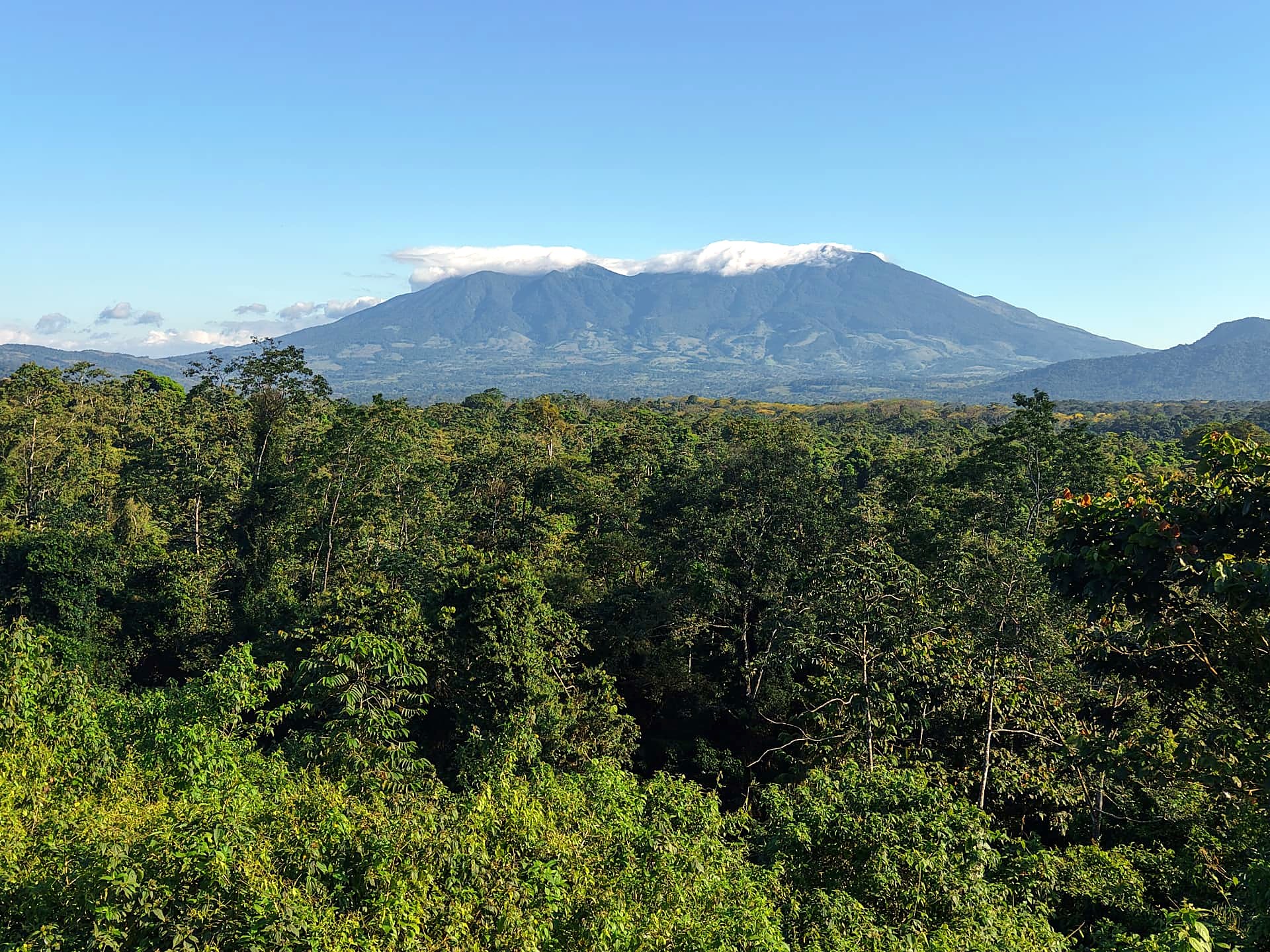
The Osa Peninsula is one of the quietest and ecologically most valuable regions of Costa Rica. Its primary draw, Corcovado National Park, is accessible only with an advance booking and a certified guide. The very protection that preserves the landscape's value significantly restricts development on surrounding parcels. Prior to purchasing, it is therefore essential to verify the boundaries of protected areas, forest cover, watercourses, the maritime-terrestrial zone, legal access, and water availability.
A tranquil zone where nature sets the rules
The Osa Peninsula on the South Pacific does not cater to the mass tourism of Guanacaste. Primary rainforest, small settlements (Puerto Jiménez, Drake Bay, Carate), and low-capacity accommodation predominate. For buyers, this translates into peace and pristine nature, but also more challenging accessibility, limited services, and basic infrastructure.
The territory is administered by the Osa Conservation Area (ACOSA) under the national SINAC system. In addition to Corcovado National Park, this encompasses the Golfo Dulce Forest Reserve, the Térraba-Sierpe National Wetland, and other protected areas. Many private parcels lie directly adjacent to them.
Why entry to Corcovado is restricted
SINAC regulates visitor capacity at individual park ranger stations (e.g. Sirena, La Leona, San Pedrillo, Los Patos). Since 2014, entering the park has required an accredited guide and a pre-purchased permit. Moving off marked trails and unauthorised overnight stays are strictly prohibited.
For an investor, this holds twofold significance: the restrictions safeguard the very assets that draw visitors, whilst also meaning that accommodation demand is directly tied to a regulated cap on tourist numbers. Current visitor quotas and admission rates should be verified directly with SINAC.
How the law protects the park's surroundings
Under Forestry Law No. 7575, national parks and biological reserves form part of the State Natural Heritage (Patrimonio Natural del Estado). This is inalienable and cannot be acquired through adverse possession or developed privately. Any parcel encroaching upon it may carry a defective or legally unusable title.
Article 19 of the Forestry Law prohibits land-use change on parcels covered by forest. Exceptions are narrow and require formal permits. In practice, a 'rainforest parcel' may offer no legally buildable footprint whatsoever.
Forest reserves and other protected categories operate under their own management plans (planes de manejo), which may restrict land use even on private parcels situated within them. Furthermore, every construction project is subject to SETENA environmental screening pursuant to Organic Environmental Law No. 7554.
Watercourses and springs: protection buffers
Article 33 of the Forestry Law establishes mandatory protection buffers in which neither tree felling nor construction is permitted:
- A 100 m radius around springs feeding permanent watercourses.
- 15 m from the banks of rivers and streams in urban zones, and 50 m in rural zones on flat terrain; 50 m on sloping terrain.
- A 100 m buffer around lakes and natural reservoirs.
- Aquifer recharge areas (zonas de recarga) designated by the competent authorities.
Beaches and the coastal zone
The Maritime-Terrestrial Zone Law No. 6043 defines a 200 m belt measured from the mean high-tide line. The first 50 m constitutes the public zone (zona pública), which cannot be privately owned or built upon; the remaining 150 m may only be occupied under a municipal concession and an approved regulatory plan (plan regulador). Mangroves and wetlands are protected irrespective of distance.
Coastlines situated inside protected areas are governed by the specific conservation legislation for those territories, rather than standard concession regimes. For a 'beachfront' parcel on the Osa Peninsula, one must first verify that the land does not form part of the Patrimonio Natural del Estado.
Pre-acquisition checklist for land on the Osa Peninsula
The following points should be vetted by an independent Costa Rican lawyer and surveyor before paying any non-refundable deposit:
- Land registry extract (folio real) and cadastral plan (plano catastrado) – full alignment of registered area, boundaries, and ownership details.
- Protected area overlap: written certification from SINAC/ACOSA confirming whether the land lies within a national park, reserve, wetland, or biological corridor.
- Forest cover: whether the parcel or part of it is classified as forest and how much unencumbered land remains outside it; ideally verified by an independent forestry engineer's report.
- Watercourses and springs: clear demarcation of protection buffers on the site plan and calculation of the remaining buildable footprint.
- Land use: uso de suelo certificate issued by the relevant local municipality (Osa or Golfito) and compliance with the plan regulador, where applicable.
- Environmental permitting: the specific SETENA environmental filing required for the planned development and its associated conditions.
- Legal access: direct frontage onto a municipality-registered public road, or a registered right of way (servidumbre de paso) recorded in the Registro Nacional; an informal track is legally insufficient.
- Water supply: written letter of availability from the local ASADA or AyA, or a formal water extraction concession from MINAE; a natural stream on the parcel confers no automatic right to draw water.
- Electricity: formal confirmation of grid connectivity from the distribution utility, or a realistic capital budget for an off-grid solar installation.
- Wastewater disposal: an on-site treatment solution approved by the Ministry of Health, factoring in soil permeability, topography, and proximity to water bodies.
- Maritime-terrestrial zone: whether any portion of the parcel falls within the 200 m ZMT belt and under what legal regime.
- Rainy season access: river fords, bridges, and general road conditions between May and November.
Implications for the investor
On the Osa Peninsula, one does not simply purchase acreage, but legally usable footprint and viable access. Two parcels of identical size can command vastly divergent valuations depending on forest cover, riparian buffers, and road access. A vendor's assurance that 'the land is buildable' is no substitute for formal administrative certification for your intended development.
We recommend making any purchase agreement strictly contingent upon formal prerequisites: a favourable uso de suelo, confirmed water availability, registered legal access, and satisfactory due diligence regarding protected area boundaries. Purchase funds should remain in escrow until all conditions precedent are fully satisfied.
Sources and materials
We separate official sources from professional and commercial commentary. Checking sources is not an individual legal review or confirmation of every current administrative procedure.
- SINAC – Parque Nacional Corcovado ↗
Commercial source · Costa Rica · Checked 18 October 2026
National park administration, visitor quotas, permits, and guides.
- Ley Forestal č. 7575 (čl. 13–15, 19, 33) ↗
Commercial source · Costa Rica · Checked 18 October 2026
State Natural Heritage (Patrimonio Natural del Estado), prohibition on forest land-use change, water protection buffers.
- Ley sobre la Zona Marítimo Terrestre č. 6043 ↗
Commercial source · Costa Rica · Checked 18 October 2026
200 m belt, 50 m public zone, concessions.
- Ley Orgánica del Ambiente č. 7554 ↗
Commercial source · Costa Rica · Checked 18 October 2026
Environmental assessment, SETENA.
- Ley de Aguas č. 276 ↗
Commercial source · Costa Rica · Checked 18 October 2026
Public nature of water resources and extraction concessions.
- Ley General de Caminos Públicos č. 5060 ↗
Commercial source · Costa Rica · Checked 18 October 2026
Public roads and formal road registry.
- SETENA ↗
Commercial source · Costa Rica · Checked 18 October 2026
Environmental assessment forms and evaluation procedures.
- Registro Nacional ↗
Commercial source · Costa Rica · Checked 18 October 2026
Property title certificates and cadastral survey plans.
- INVU – Compra de terreno propio ↗
Commercial source · Costa Rica · Checked 18 October 2026
Recommended procedural steps when purchasing land.
General information only, not legal or tax advice. Consult a Costa Rican lawyer before deciding.